
Apple Picking Should Leave You With Apples, Not a Backache
 "Apple Picking Should Leave You With Apples, Not a Backache")
TL;DR:
Apple picking is more physical activity than most people expect from a family outing.
- Bend from your knees and hips, not your lower back
- Alternate arms when reaching overhead instead of favouring one side
- Keep apple bags light, close to your body, and switch shoulders often
- Wear supportive footwear for uneven orchard terrain
- Have a chiropractor look at soreness that lingers beyond a couple of days or starts limiting your movement
September in Southern Ontario means cooler mornings, changing leaves and one of fall's favourite family traditions: apple picking. For families in Mississauga and South Brampton, a trip to a nearby orchard is an easy way to spend a beautiful day: fresh air, plenty of walking, maybe some cider, and inevitably far more apples than anyone planned on.
But apple picking is also more physical than it looks. After an hour or two of reaching, bending and carrying over uneven ground, you may discover muscles you forgot you had. A little preparation can help make sure the memories, and the apples, are what you bring home.
Why It Catches People Off Guard
You're reaching overhead for the good apples, crouching under low branches, hauling bags and navigating ground that isn't always level. No single movement is a problem on its own. What adds up is repetition, often in an awkward position, at a volume your body isn't used to. Your back, neck, shoulders, hips, knees and ankles all end up working harder than the day called for.
Your Lower Back Absorbs More Than You'd Guess
Rounding forward at the waist to reach a low branch is easy to do without noticing, and doing it repeatedly is where lower-back discomfort tends to start.
- Bend through your knees and hips instead of rounding your back
- Keep whatever you're reaching for close to your body
- If you've been crouched for a few minutes, straighten up and walk around before going back
- If an apple is out of easy reach, step closer rather than stretching or twisting toward it
Overhead Reaching Adds Up Fast
Holding your arm up and extended tires the shoulder, neck and upper back faster than people expect.
- Switch arms regularly instead of favouring your dominant side
- Move closer to the tree so you're not reaching at full extension
- Skip anything too high to grab comfortably. Leave it for someone taller, or come back to it
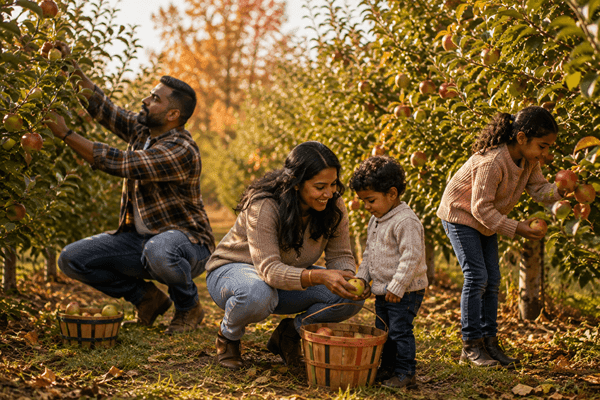
The Bag Gets Heavier With Every Apple
An empty bag weighs nothing. A full one, carried lopsided across a field, pulls your posture off-centre and loads extra strain onto your back, shoulders and hips.
- Switch sides often rather than carrying on one shoulder the whole time
- Split the load into smaller bags instead of one heavy one
- When lifting a full bag off the ground, bend at the knees and hips, close to your body
- Avoid lifting and twisting at the same time, a common way people tweak something while loading the trunk
Footing Matters More Than You'd Think
Grass, mud, slopes and stray fallen apples make for uneven footing, and a heavy bag makes your ankles and knees work harder to stay stable on top of it.
- Wear shoes built for walking outdoors, not sandals
- Watch your footing, especially in wet grass or near trees where windfall apples collect
Give Your Body a Minute Before the Drive Home
Going straight from hours of bending and carrying into sitting still can leave tired muscles stiffer than they'd otherwise be.
- Walk around for a few minutes without a load before you leave the orchard
- Adjust your seat so you're properly supported on the drive back
- Resist grabbing every bag at once when you get home. One more trip won't hurt
When Soreness Is More Than Just Soreness
Some next-day stiffness is normal, especially if your body isn't used to a few hours of bending and carrying. Pay attention if you notice:
- Discomfort that doesn't ease up within a couple of days
- Pain that gets worse instead of better
- Trouble with everyday movements like turning your head or bending to tie your shoes
- Sharp pain, numbness or tingling anywhere
A chiropractor may assess symptoms like these, help identify what's contributing to the discomfort, and determine whether chiropractic care or another type of assessment is the right next step.
Frequently Asked Questions
Yes. Repeated bending, reaching and lifting, especially at a volume your body isn't used to, is a common source of lower-back irritation. It's usually the twisting-while-lifting combination, not any single motion, that causes the most strain.
Holding your arm overhead for extended stretches fatigues the shoulder and upper back faster than most people expect, since it's a position your arm doesn't hold for long in everyday life. It's the sustained reach, not any one grab, that does it.
Keep it close to your body, switch shoulders often, and consider two smaller bags instead of one large one. Splitting the weight evenly is what actually prevents the lopsided strain that leads to soreness.
General next-day stiffness that eases within a day or two usually isn't cause for concern. Pain that lingers longer, worsens, limits your movement, or comes with numbness or tingling is worth having assessed.
Enjoy the Season Without Paying for It the Next Day
Apple picking is one of those simple September traditions that makes living in Southern Ontario worth it. Just keep in mind your body is doing more work than the outing lets on. Take your time, switch positions, mind how you lift, and skip the temptation to carry half the orchard back in one trip.
If your apple-picking adventure leaves you with back, neck, shoulder or joint discomfort that sticks around, contact Dr. Lanoue, Chiropractor in Mississauga, to have it assessed.
 "Dr. Serge Lanoue") Author:Dr. Serge Lanoue
Author:Dr. Serge Lanoue| Tags:chiropractic treatmentlow back painBack PainLeg Painchiropractic careKnee PainShoulder PainNeck pain |
Post comment