
One More Batch? Why Holiday Baking Can Leave You Aching

The kitchen smells like butter and cinnamon. Someone has put on the holiday playlist you’ve been hearing since the kids were little, and your teenager, who was too busy to help ten minutes ago, has appeared just in time to “check” the shortbread. There’s flour on the floor, a tray cooling by the window, and one more batch to go. You reach for the mixing bowl and realize your lower back has already called it a night.
Whether you’re baking for a cookie swap in Mississauga or bringing dessert to a family dinner in South Brampton, a few small changes can make the afternoon easier on your back, neck, shoulders and wrists.
TL;DR
- On your feet all afternoon? Use the oven timer as a reminder to walk around, sit down or switch tasks.
- Wrists tired from rolling and mixing? Work with smaller portions and trade jobs before your grip wears out.
- Neck stiff from decorating? Bring the cookies closer and rest your forearms between cookies so you can ease up on the forward lean.
- The same pain keeps coming back? A chiropractor may assess which movements bring it on and discuss care suited to your symptoms.
1. Standing at the counter can leave your lower back stiff
Measuring flour takes a minute. Mixing takes a few more. Then there’s scooping dough, lining pans and doing a quick round of dishes. Before you know it, you’ve spent an hour on your feet and moved about as far as the distance between the sink and the stove.
A long stretch in one position can leave your feet and legs tired and your lower back stiff. You might notice it most when you finally straighten up or take a few steps. A low counter can add to the effort if you spend much of that time leaning over the bowl.
Make the oven timer work for you. Once a tray goes in, take a lap around the house or pull up a chair to fold cookie boxes. If you’re baking with your kids, trade jobs between batches. A teen can take over scooping while you sit down and write gift tags. They may negotiate a cookie fee.
2. Stiff dough can give your wrists and forearms a workout
The recipe says “mix until combined,” which sounds perfectly reasonable until your wooden spoon is halfway through a bowl of cold gingerbread dough. Stirring, kneading and rolling all involve repeated gripping and pressing. By the second batch, you may feel it in your hands, wrists or forearms. Your shoulders may get in on the action as you press harder.
Give yourself less dough to wrestle with. Divide it into smaller portions and roll one at a time. For tasks that require downward pressure, try a stable work surface low enough that you can press without shrugging your shoulders. If your hands are getting tired, switching to lining trays gives your grip a break while the baking keeps moving.
3. Cookie decorating can sneak up on your neck and shoulders
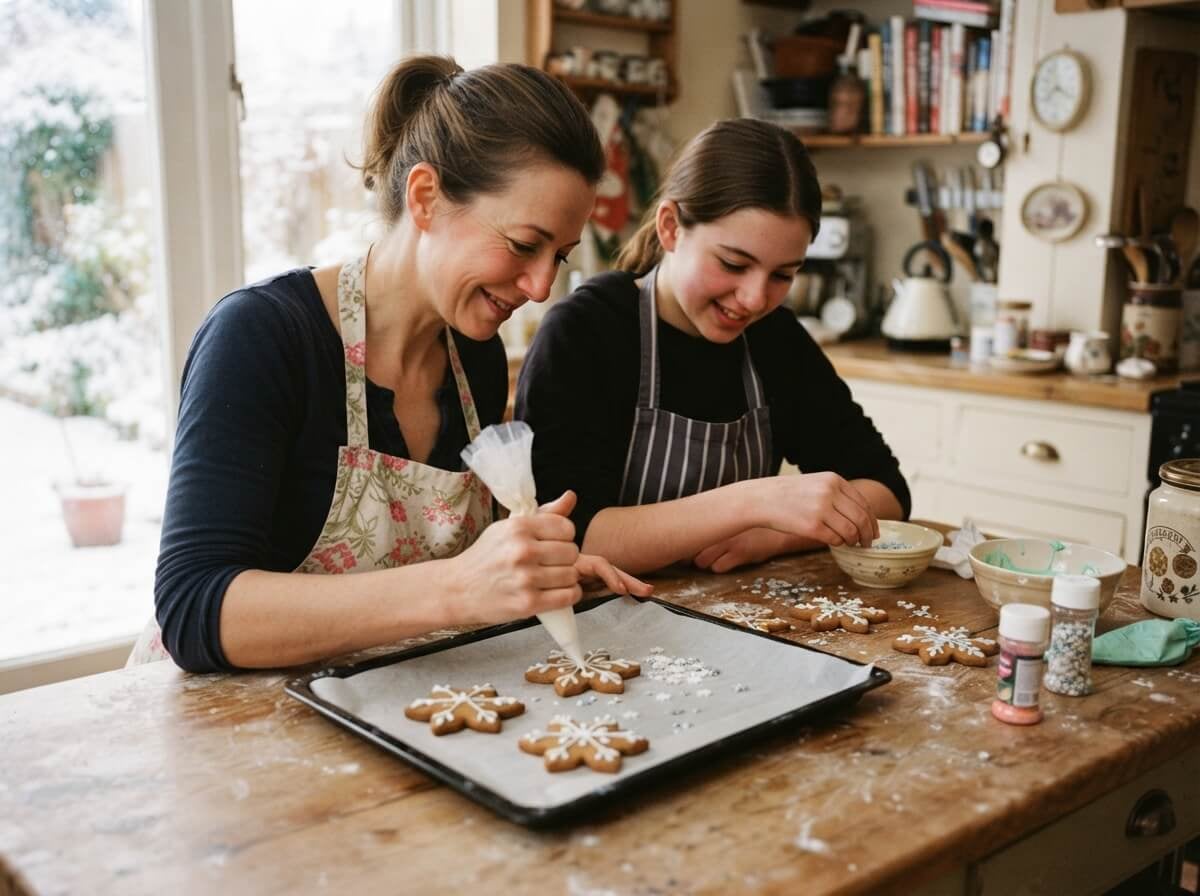
Decorating is the part everyone wants to help with, right up until it’s time to outline the last twelve snowflakes. When the tray is too far away, you end up reaching with your arms and leaning forward to see what you’re doing. That’s when your neck and upper back may start to stiffen. If you’re piping every cookie in one go, your hands can tire, too.
Pull up a chair and slide the tray close enough that you can rest your forearms on the table between cookies. If you still find yourself leaning in to see the details, raise the tray on a stable surface. And when your piping hand starts to tire, switch to adding sprinkles or let someone else take a turn with the icing bag. The last snowflakes can look a little different. They usually taste the same.
4. The heaviest lift often comes at the end
A full tray feels heavier when you’re reaching into a low oven. Add a crowded counter and you might find yourself holding a hot pan out in front of you while twisting around to find somewhere to put it. That’s a lot to ask of your back and shoulders after an afternoon in the kitchen.
Clear a spot before you open the oven. Set out a heat-safe trivet nearby. Use both hands with dry oven mitts, bring the tray in as close as safely possible and step around to face the counter as you set it down. If a dish is especially heavy, ask another adult to take over the lift.
How a chiropractor may help with recurring baking aches
Say your lower back starts aching twenty minutes into rolling dough. A few minutes away from the counter helps, but the ache returns the next evening while you’re chopping vegetables for dinner. That’s the kind of pattern worth mentioning at an appointment.
Dr. Lanoue may ask whether the ache starts while you’re standing upright or when you lean forward, what eases it and whether it travels into your leg. He may then ask you to bend or move in a few different ways to see which movements bring on the familiar ache. What he finds may help guide the next step. If leaning over the counter reliably brings on your symptoms, for example, you might start by bringing your work closer and taking shorter turns at the counter.
Depending on the assessment, your care may include exercises to help you get back to everyday activities more comfortably, simple changes to how you do everyday tasks, or hands-on treatment such as spinal manipulation.
Frequently Asked Questions About Baking Aches & Pain
Why does my lower back hurt when I bake?
Time on your feet, leaning toward the counter and reaching into a low oven can all contribute to discomfort. Notice when the ache starts. If it comes on during a long stretch of prep, try alternating between sitting, standing and moving around.
What should I tell my chiropractor about pain that starts while baking?
Describe the task, where you felt the pain, how long it lasted and what helped. For example, “My right wrist starts aching after I pipe a dozen cookies. It settles when I stop, but I feel it again when I open a jar.” That gives your chiropractor a clearer picture of which movements to assess.
When should I get baking-related pain checked?
Consider booking an assessment if the same pain keeps returning, lingers after you’ve finished baking or starts to interfere with everyday tasks like cooking, carrying groceries or working at a desk.
Also: Read the guidelines and recommendations for working in a standing position from the Canadian Centre for Occupational Health and Safety.
Enjoy the shortbread. Share the workload.
Let someone else roll the next batch. Pull up a chair for the decorating. And when the last tray comes out, give yourself a few minutes to sit down and actually eat one.
If the same ache keeps showing up in the kitchen or elsewhere, book an assessment with Dr. Serge Lanoue at his Mississauga chiropractic clinic, which also serves patients from South Brampton. Visit Dr. Lanoue’s website
 Author:Dr. Serge Lanoue
| Tags:chiropractic treatmentchiropractic adjustmentlow back painBack PainLeg Painchiropractic careJoint PainKnee PainShoulder PainStressNeck pain |
Post comment